
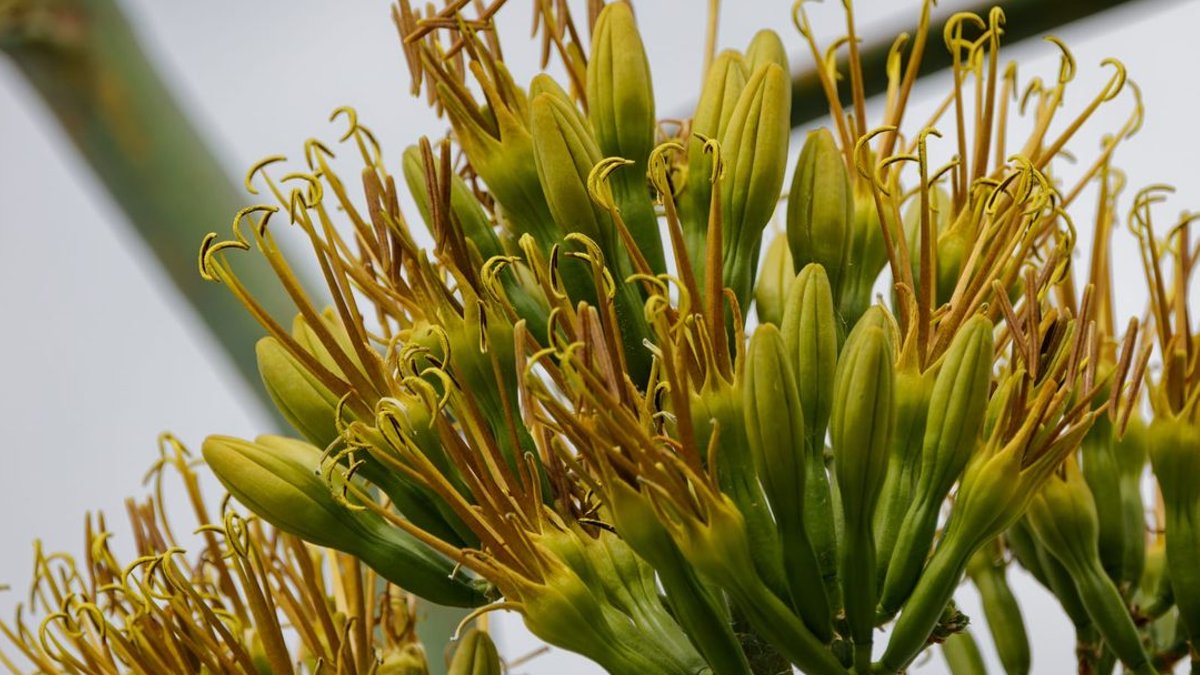
A decade-old plant at Birmingham Botanical Gardens is experiencing a final, spectacular phase of life with a ‘death bloom’ display that has already shattered the glasshouse ceiling. The Agave sisalana, which has spent ten years growing in the Arid Glasshouse, is now shooting up a massive flower spike that has reached 546 centimeters. This height is comparable to a fully grown female giraffe, marking a rare event for visitors to the UK.
The rare ‘death bloom’ phase
This specific stage, known as the ‘death bloom’, represents the final chapter for the agave. The rare phenomenon occurs when the plant uses years of stored energy to create a huge flowering display in an attempt to reproduce before it dies. The process can last up to half a year, with some species capable of growing up to 12 inches per day to reach a final height of 14 meters. This aggressive growth strategy is known as monocarpic behavior, where the organism prioritizes reproductive success in harsh environments over its own longevity.
The team at the gardens will collect hundreds of tiny plantlets, known as bulbils, that will fall from the flowering stem once the bloom fades. These will be stored for future planting, preserving the genetic line of this specific specimen. While the Agave genus is native to the Americas and contains 230 different species, seeing one burst through a glasshouse roof remains a striking event for most visitors.
Related: Protect Pets from Heatwave Dehydration and Sunburn
Keeping the plant alive
The team has managed the agave’s health through careful temperature control. Alberto Trinco, the Senior Display Glasshouse Horticulturist, explained that the plant was watered and fed regularly during spring and summer. This routine supports the rapid growth caused by higher temperatures and sunlight. However, the strategy shifts during winter. To maintain the balance and prevent the plant from exhausting its reserves too early, the staff keep the Arid House cooler than one might expect, maintaining a minimum temperature of 14C and ceasing watering entirely during the colder months.
While the ‘death bloom’ draws attention to the plant’s reproductive drive, the underlying biology is actually quite simple. Monocarpic plants are evolutionarily programmed to flower just once, use all their stored energy to make seeds, and then die. This ‘one-shot’ strategy maximizes reproductive success by flooding the ecosystem with thousands of seeds at a single, optimal time rather than spreading the effort over many years.
It is a fascinating balance of conservation and biology that allows horticulturists to witness such a dramatic event. The gardens are encouraging people to come and see this remarkable phenomenon occurring now in the UK before the spike begins to fade.


