
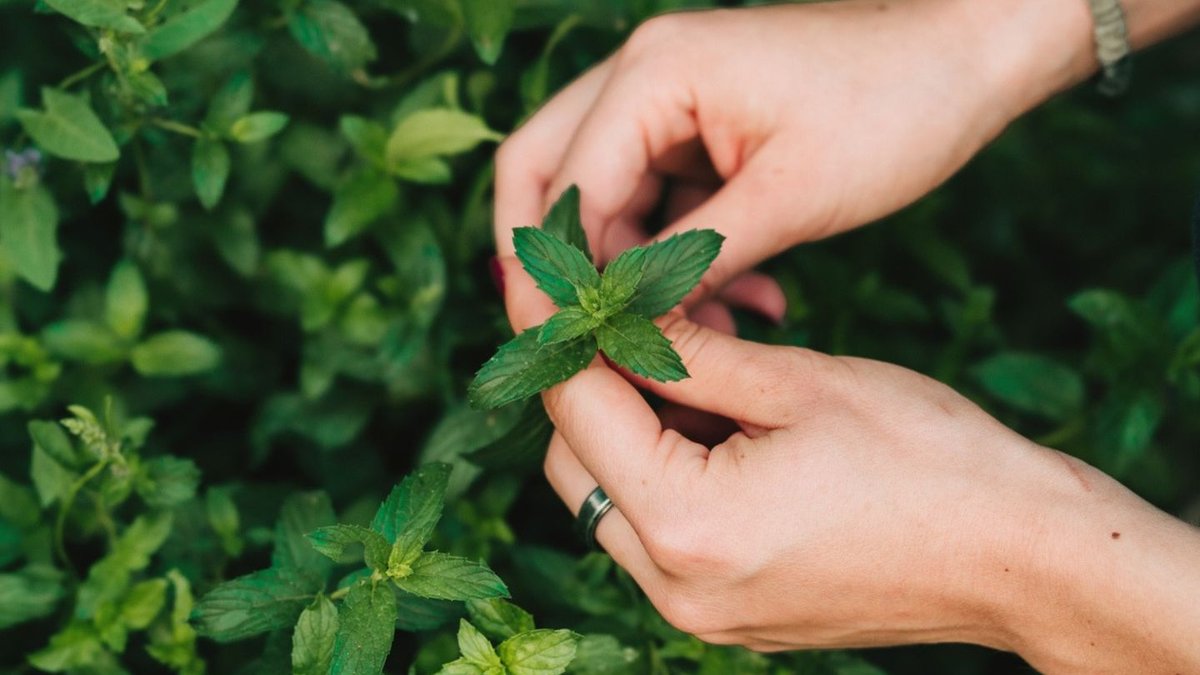
Most people who bring mint indoors in the fall end up with spindly stems and pale leaves by January, even though the plant is naturally suited for indoor growing. The problem usually isn’t the variety, but the environment. Herbs stretch toward light in winter because days are short and the sun sits low, which leaves weak stems and sparse foliage. Iowa State University Extension notes that while many herbs need eight hours of direct light per day, mint ranks as one of the best species for indoor cultivation. A kitchen counter a few feet from the glass rarely provides enough intensity to sustain healthy growth.
Positioning for Success
Location determines whether the plant survives or fades. Iowa State Extension suggests a south-facing window as the ideal choice, while a bright east or west window can also work. The University of Maryland Extension points to south or west windows. If the available window doesn’t meet these requirements, supplemental lighting becomes necessary. A grow light placed 6 to 12 inches from the leaves can bridge the gap. Running these lights for 12 to 16 hours daily on a timer mimics the length of a summer day, which helps the plant maintain structure rather than stretching.
Once the right light source is established, other environmental factors play a role in the plant’s health. Temperature and humidity influence growth rates just as much as exposure. Illinois Extension recommends keeping the room between 60 and 70°F, avoiding drafts and heat vents that create dry, extreme conditions. Raising humidity helps prevent stress. Both Illinois and Maryland Extension advise setting the pots on a tray filled with pebbles and water, and Maryland suggests misting the leaves daily. This setup mimics the moist air found in many outdoor growing environments, which herbs often struggle to find inside a heated home.
Care and Maintenance
Not all herbs tolerate these indoor conditions with the same resilience. Rosemary, sage, lemon balm, marjoram, chervil, and bay laurel are harder to grow indoors because they require more light or are more susceptible to pests like spider mites. Parsley, chives, basil, oregano, cilantro, and thyme are better choices for beginners. Maryland Extension recommends a light feeding schedule rather than heavy doses of fertilizer, as indoor plants typically need less nutrition than those outside. Regular inspection for pests remains a good habit, especially when growing less forgiving varieties alongside mint.


