
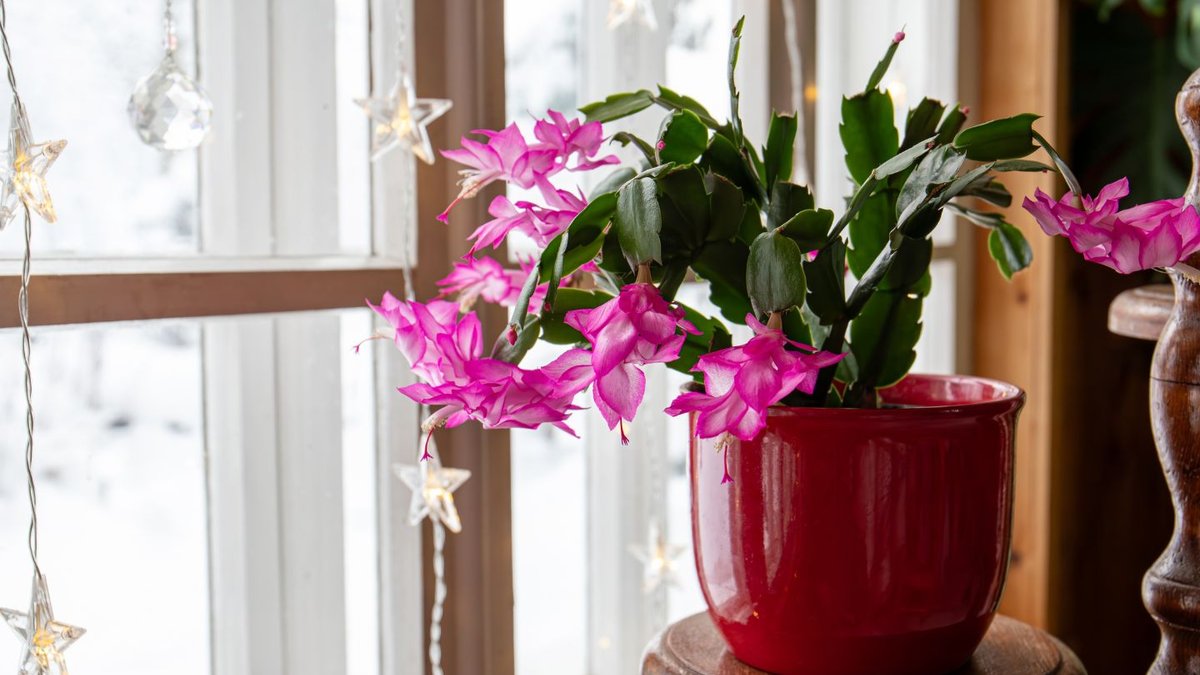
That label in the pot might be wrong. A plant often sold as a Christmas cactus frequently blooms right around Thanksgiving instead of the named holiday. This common mix-up happens because many plants in nurseries and big box stores are actually Schlumbergera truncata, the Thanksgiving cactus, rather than the true Schlumbergera bridgesii. The plant may simply be following its natural schedule rather than the tag on its pot. According to North Carolina State Extension and a horticulture newsletter from University of California Agriculture and Natural Resources, many plants sold as Christmas cactus were actually Thanksgiving cactus, and Clemson University notes the Thanksgiving cactus is the one most often found for sale during the winter holidays.
How to tell the difference
Look at the edges of the stem segments. A Thanksgiving cactus features saw-toothed projections, often appearing as hooks or claws, along the margins of each flat segment. Clemson explains that on a Thanksgiving cactus, Schlumbergera truncata, each segment has 2 to 4 saw-toothed projections along its margins, pointed like small hooks or claws. The true Christmas cactus, Schlumbergera bridgesii, has smoother, rounded edges with only a slight scallop. You can also check the flower color; the pollen-bearing tips of the Thanksgiving cactus are yellow, while the Christmas cactus displays purplish-brown anthers. A third look-alike, the Easter cactus, has oval segments with soft, rounded edges and flowers in the spring.
Read Also: How to Roast Pumpkin Seeds Into a Snack
Getting buds to form
Both plants need cool nights and long darkness to set buds. Keeping night temperatures between 50 and 59°F encourages blooming regardless of day length. Clemson says without cool temperatures, the plant needs 14 hours or more of continuous darkness a day, ideally starting around mid-September and continuing for at least 6 weeks.
The UC newsletter suggests a cool, dark spot with no light from 5 p.m. to 8 a.m., so even a lamp switched on in the evening can interrupt it. During this time, slightly reducing water can help, but once buds appear, the soil must stay evenly moist. A sudden temperature change often causes the buds to drop, so picking the display spot before the buds form is essential.
Read Also: Designers Adopt Hidden Walk-In Pantries for Clutter-Free Kitchens
Handling the bloom
Once the flowers open, the plant fits naturally into holiday decor. To keep those blooms on the branches, keep the plant away from heating vents, fireplaces, and drafty doors. Clemson lists an excessive number of buds, a sudden change in temperature and soil that dries out as common causes of bud drop. The UC newsletter notes that these cacti prefer to be snug in their pots, nearly pot-bound, so resist the urge to repot them this month. If you start the dark treatment late in the season, the plant will simply bloom on its own timeline rather than the date on the label. That’s normal.


