
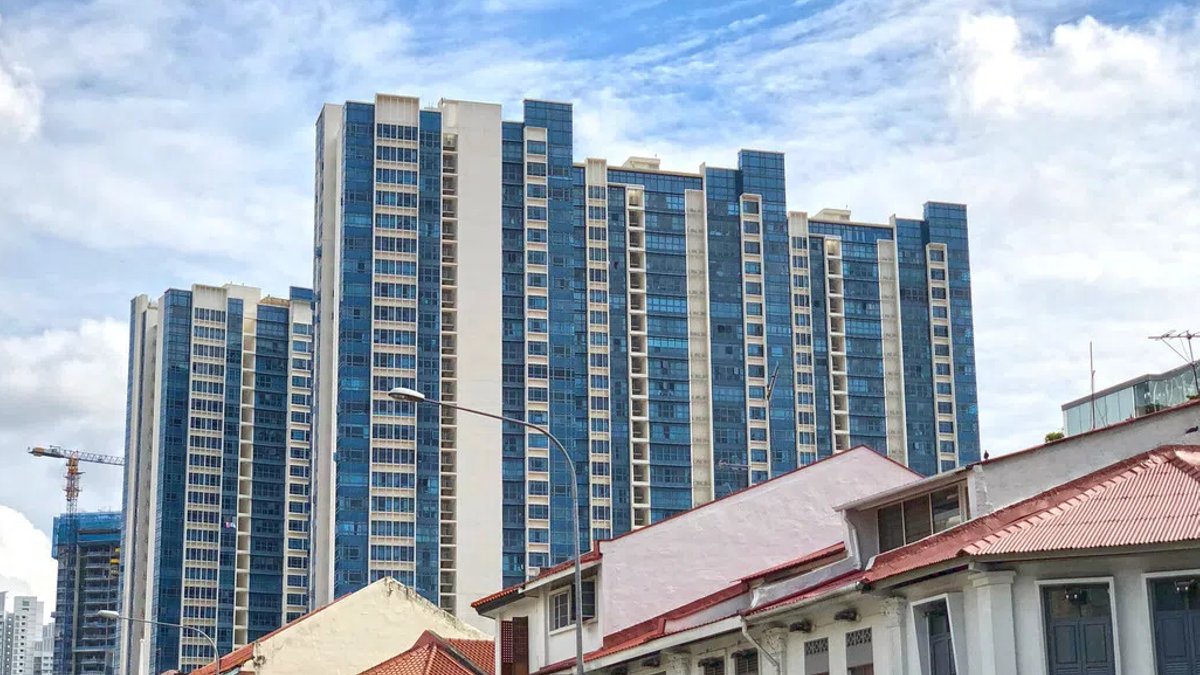
The latest survey from the National University of Singapore’s Institute of Real Estate and Urban Studies shows a growing split between Singapore’s public housing market and the private condo sector, raising concerns about whether the classic “HDB to condo upgrade” remains within reach for today’s buyers.
Survey finds structural decoupling of buyer pools
According to the June 2026 report, 31 % of real‑estate executives expect the two markets to diverge permanently. Respondents said the traditional flow of homeowners moving from HDB flat to private condominiums is weakening, a trend analysts label “structural decoupling.”
Historically, owners would hold an HDB flat for the five‑year Minimum Occupation Period (MOP), sell it at a profit, and use the proceeds to fund a condo purchase. That pipeline fed demand for suburban private projects outside the Central Region. The new data suggest that buyers for public flats and private homes now have distinct motivations.
Private‑property purchasers tend to prioritize investment returns, wealth preservation, and global liquidity. In contrast, HDB buyers are largely constrained by local housing policies and income caps. This shift, combined with rising down‑payment requirements, is expected to reduce the number of upgraders.
Price gaps widen as incomes lag
Between 2020 and the first half of 2026, median resale HDB prices rose 48.2 % to about $630,000. New suburban condos, however, surged 66.1 % to exceed $2 million. The median price gap therefore expanded from roughly $787,000 in 2020 to an eye‑watering $1.38 million in H1 2026.
During the same period, median household income increased only about 17 %. Because wages have not kept pace with private‑launch prices, the financial leap from public to private housing has become steeper.
Government policy reinforces the separation. The Prime, Plus, and Standard HDB frameworks impose a ten‑year MOP, subsidy clawbacks, and income ceilings of $14,000 for families and $7,000 for singles on resale Prime and Plus flats. By limiting eligibility, higher‑earning households are filtered out of the upper tier of public housing, further distancing the two buyer groups.
Online reactions are mixed. Some netizens acknowledge the growing disparity between property values and incomes, while others praise recent HDB measures aimed at curbing the flow of upgraders that have historically driven price differentials.
Related: CEA Online Platform to Verify Listings from 2027
For owners of private condos, the market now relies less on first‑time HDB upgraders and more on affluent buyers, intergenerational wealth transfers, en‑bloc sellers, and existing private‑home owners seeking investment or downsizing opportunities.
Because development costs, land prices, and construction overhead remain high, private‑home prices are projected to stay firm even if HDB resale prices level off or dip slightly.
Potential buyers may find the pool smaller. While limited supply and deep‑pocketed investors protect property values, resale liquidity could depend more on private‑sector participants than on mass‑market HDB upgraders.
One way to understand the broader impact is to consider the role of housing as a wealth‑building tool. When a large segment of the population can no longer move up the property ladder, the ability to accumulate assets through home ownership diminishes, potentially reshaping long‑term savings patterns across households.
If you own an HDB flat, upgrading now demands a higher cash outlay. Previously, selling at MOP often generated enough cash to cover a 25 % down‑payment (with at least 5 % in cash) for a standard suburban condo, while household income covered the remainder. Today, entry‑level new condo launches regularly exceed $2 million, and loan stress‑test rates under the 55 % Total Debt Servicing Ratio (TDSR) require substantially higher incomes and upfront capital.
Resale condos present a more attainable alternative. The price gap between an HDB flat and a resale condo is considerably narrower than that for a brand‑new launch, easing the cash‑flow burden for many upgraders.
Executive Condominiums (ECs) still function as a government‑backed bridge for eligible HDB owners. However, EC buyers face a tighter 30 % Mortgage Servicing Ratio (MSR) cap, reducing borrowing capacity compared with private‑bank loans.
Liquidity remains uncertain.


