
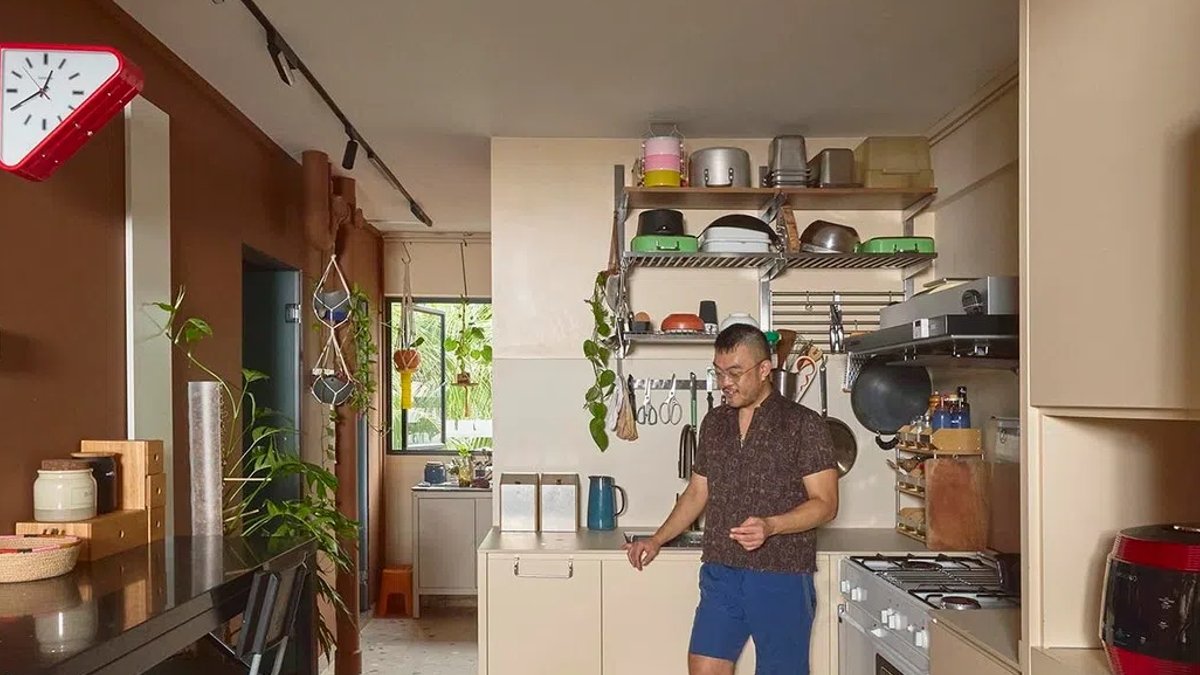
When Avin set out to design his Singapore home, he did more than follow a Mid‑Century Modern trend; he created a space shaped by his neurodivergent perception of colour, texture, and sound.
Design driven by sensory experience
Three years ago, Avin received a diagnosis of autism and ADHD. The conditions affect how he interprets colour, light, and tactile cues, which in turn guided every design decision. He describes colour as a “big role player” in daily life, noting that different shades can trigger specific moods or memories. This heightened sensitivity led him to choose bold hues—mustard yellow chairs and dark blue walls—each placed to create a layered visual effect when viewed from various angles.
Materials also matter. Avin favors wood and select metals, appreciating the natural feel of reclaimed timber and the functional sturdiness of metal fixtures.
Second‑hand pieces become personal statements
The home is filled with vintage and second‑hand markets furniture, a choice Avin says stems from the monotony of modern minimalist designs. “Monotonous designs and plain minimalist furniture of the 21st century can all feel the same,” he explained, preferring the distinct character of older pieces. Many items carry personal significance and visual patterns that resonate with his autism‑related focus on repetition.
Related: HDB bans food offerings and joss sticks in corridors and staircases
Even functional elements like door handles were selected with care, as protruding hardware can feel unsettling.
His dining room illustrates this approach. A wooden table anchors the space, while colourful dinnerware—each piece chosen for its hue complement—adds visual interest. The mix of shapes, colours, and sizes transforms meals into a multisensory experience, aligning with his belief that “every piece of dining ware has a purpose or story.”
Avin’s sourcing habits are rooted in local thrift stores and online platforms that specialize in vintage goods. This method not only supports sustainable consumption but also allows him to curate a collection that feels uniquely his.
Balancing personal needs with broader community
Beyond personal comfort, Avin’s home serves as a safe haven for friends and peers who share similar neurodivergent experiences. By shaping the environment around his own sensory thresholds, he creates a welcoming space where others can relax without overstimulation. The careful layering of colours, textures, and sounds contributes to an atmosphere that is both stimulating and calming.
From a broader perspective, Avin’s project highlights how neurodivergent designers can challenge conventional interior‑design norms. While mainstream trends often prioritize uniformity, his approach shows that valuing sensory diversity can lead to richer, more inclusive environments. As awareness grows, homes like his may inspire a shift toward spaces that consider a wider range of human experiences.
Related: UOB Visa card balances online and in-store spending
Avin’s attention to detail extends to functional aspects such as kitchen surfaces, which he selected for ease of cleaning and heat resistance. Metal accents are limited to essential fixtures, reinforcing the focus on practicality alongside aesthetic appeal. The overall result is a home that feels cohesive despite its eclectic components, each element serving both a visual and tactile purpose.
In the living room, the mustard yellow chair positioned against a brown wall creates a visual triad with a dark blue accent wall in the bedroom, forming a recurring colour palette that ties the spaces together. This intentional use of colour swatches reflects Avin’s method of “comparing colours, from material shades to room walls,” ensuring that each room contributes to the overall narrative.
Visitors may find the lack of standardization surprising, yet the diversity of pieces enhances the dining experience and everyday living. The design, rooted in personal sensory preferences, demonstrates how individual needs can shape broader design conversations as Singapore’s interior‑design scene evolves toward more inclusive concepts.
Quiet moments linger.


