
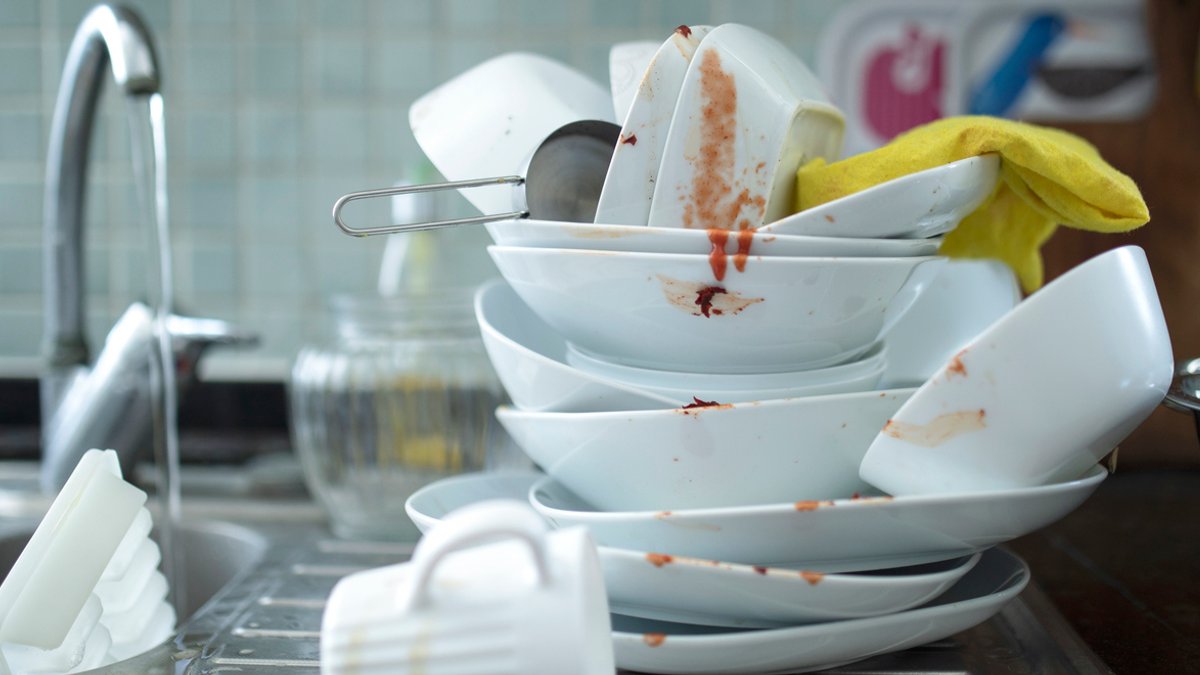
The dish rack, a staple in kitchens for decades, is set to disappear in 2026. Designers are moving away from this space-consuming item, favoring solutions that free up counter space. The shift isn’t entirely new; one country has been using an alternative since the 1940s. For decades, the dish rack has been the one kitchen object nobody really chose but everyone kept: a wire or plastic tray parked next to the sink, dripping onto the counter.
According to Homes & Gardens kitchen appliance editor Chiana Dickson, traditional racks dominate counter space, trap water, and create clutter. Dickson suggests rethinking everyday items to achieve a more organized kitchen. In an April 2026 piece, she called rethinking the everyday items you leave out “one of the easiest ways to make a kitchen feel instantly more organized.”
The Finnish solution: a cabinet that dries dishes
Finland introduced the dish drying cabinet in the 1940s. This innovative design resembles a standard upper cabinet but features an open bottom and wire or dowel shelves. Washed dishes are placed inside, allowing water to drip into the sink below while they air-dry. According to Wikipedia, the cabinet was developed in 1944 and 1945 by Maiju Gebhard, head of the household department at the Finnish Work Efficiency Institute, which began selling it in 1945. Industrial production started in 1948, and a plastic-coated steel wire version followed in 1954.
Gebhard estimated that the cabinet could cut dishwashing time in half, saving Finnish housewives 30,450 hours of their lives. Today, the dish drying cabinet is a standard feature in nearly every Finnish home, with Wikipedia noting it as “a standard accessory in virtually every Finnish home.” The Finnish Invention Foundation recognized it as one of the most important Finnish inventions of the 20th century, a distinction also highlighted by 99% Invisible.
Alternative counter-clearing designs
Not all kitchens can accommodate a dish drying cabinet. Homes & Gardens suggests several alternatives, including over-the-sink drying racks, built-in racks inside cabinets, and pot rails for hanging heavy pans. Design site 99% Invisible previously criticized sink-side racks for adding labor and clutter while taking up valuable counter space. For kitchens with cabinets above the sink, the magazine recommends compact over-sink racks or expandable draining boards, especially valuable in narrow layouts where every inch counts.
A true drying cabinet requires replacement of an existing upper cabinet, as it must sit directly above the sink with an open bottom. Bespoke built-in racks may necessitate a kitchen redesign, and over-the-sink racks might not fit if cabinets are already in place. Helen Parker, creative director at deVOL, praises hanging storage like pot rails for instantly raising both style and function.
These solutions are intended for hand-washed dishes and require regular putting away to maintain tidiness. They do not replace dishwashers but offer efficient drying options for those who prefer hand-washing.
The evolution of dish drying
The traditional dish rack’s decline highlights a growing preference for streamlined, space-saving designs. Finland’s dish drying cabinet, now nearly 80 years old, demonstrates the enduring appeal of practical, well-designed solutions. As Trendir notes, the best place to dry dishes was never next to the sink—it was right above it.


