
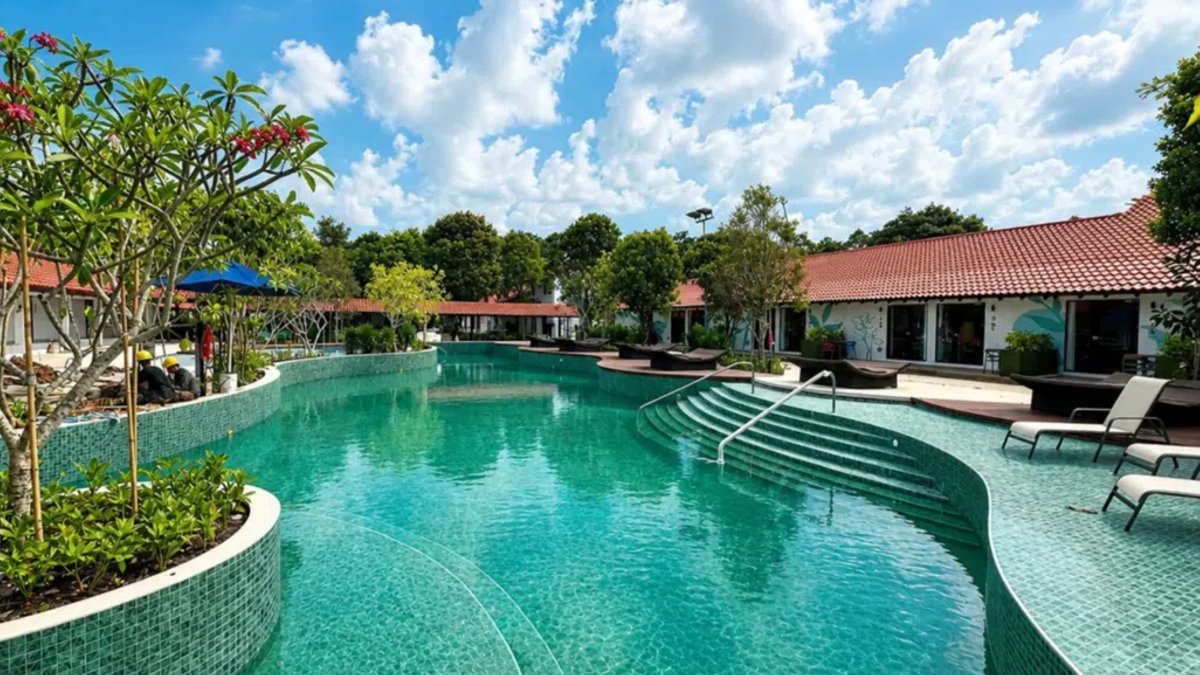
Coliwoo Resort Changi opened its doors this week, reviving the familiar family chalet concept with an online booking window that begins on 1 August 2026.
From a 40‑year‑old chalet to a modern co‑living hotel
Located on Jalan Loyang Besar, the site formerly housed a state‑run chalet that operated for roughly four decades. The original complex, owned by the Singapore Land Authority, consisted of 20 two‑storey blocks and four single‑storey structures. Those buildings, with their terracotta roofs and spacious layouts, were a staple of the Pasir Ris coastal strip, often associated with school‑holiday staycations.
After falling out of use, the property was tendered in the mid‑2020s. The winning developer transformed the 380‑room site into Singapore’s first resort‑style co‑living hotel, spanning 380,866 sq ft of landscaped grounds. The redesign blends colonial‑era bungalow architecture with a black‑and‑white colour scheme, creating a calm atmosphere that contrasts sharply with the city’s bustle.
Accommodation options for families and couples
Guests can choose between private Studio units and larger Maisonettes. The Studios provide an open‑air feel, suitable for couples who want a quiet coffee amid greenery. The Maisonettes, with three single beds in a two‑storey layout, aim to accommodate families or multi‑generational groups, offering enough space to avoid feeling cramped.
Both options sit within a setting that emphasizes sustainability. Upcycled timber furniture, rainwater harvesting, solar panels and ceiling fans that catch the coastal breeze help lower reliance on air‑conditioning. For electric‑vehicle owners, on‑site charging bays are available.
Related: Modern Construction Methods Explained
The resort sits an eight‑ to nine‑minute walk from Downtown East, making it easy to step out for a meal, a movie, or grocery shopping. A ten‑minute drive reaches Changi Airport and the nearby business park, reinforcing the claim that the location feels hidden yet accessible.
Beyond lodging, the property offers a range of amenities designed to keep guests engaged. An adult pool, a kids’ pool, a jacuzzi, a fully equipped gym and an outdoor sports court provide options for leisure and exercise. A dedicated playground allows children to play while adults relax with a book. The resort also maintains a calendar of activities, though specific events were not listed in the announcement.
The venue feels inviting.
One observation: the emphasis on “co‑living” mirrors trends seen in other urban hospitality projects, where shared‑space concepts aim to attract longer‑stay visitors seeking community feel. Compared with earlier chalet models that primarily offered static, family‑only stays, this approach could broaden the resort’s appeal to digital nomads or remote workers looking for a balanced work‑life environment.
Overall, the launch of Coliwoo Resort Changi signals a change in Singapore’s hotel sector, merging nostalgic chalet memories with modern sustainability and co‑living trends. The opening comes as the city seeks more eco‑friendly leisure options, and its pricing places it within reach of middle‑income families looking for a weekend getaway.


