
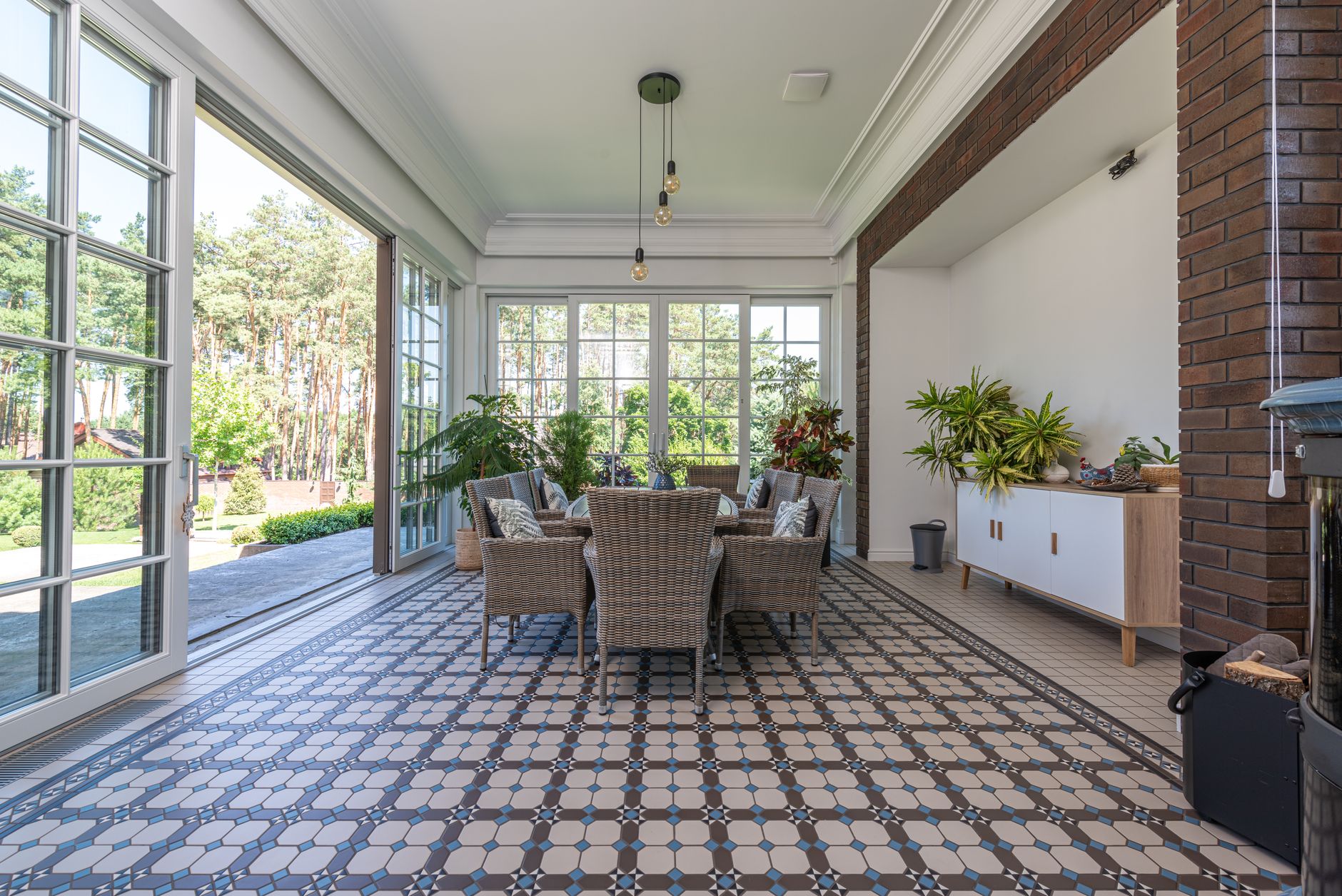
A garden room can be a great space for relaxation, work or entertainment, but not without internet access. It’s a fact of life that we need the internet. Even in the most idyllic spaces, internet access helps keep in touch, listen to music, or kick back and enjoy movies.
If your garden room doubles as a home office, broadband coverage is essential. The problem: your standard home router probably doesn’t deliver a decent signal across the lawn. By the time Wi-Fi reaches the garden room, there’s almost no chance of a stable connection. Fortunately, several options exist to extend wired or wireless access into outbuildings.
Related: Does Window Stacking Cool Your Home
Wi-Fi transmissions are weak by design. Routers keep their power low to avoid interference with neighboring networks. Walls, floors, and furniture block a substantial amount of it. Even without obstacles, transmissions become exponentially weaker with distance. The 2.4 GHz band overlaps with microwave oven frequencies, which can disrupt nearby devices. The 5 GHz band avoids that problem but is more affected by obstacles and less likely to penetrate far into a house or garden.
For indoor-only coverage, simple fixes exist. A range extender connects wirelessly to your router and repeats the transmission. A booster, strictly speaking, uses a wired connection to the router and creates a second network.
Related: Is it wise to buy furniture online when you are trying to reform and redecorate your home?
Many extenders can work in either mode. The wireless ones aren’t always reliable because they depend on a link to the router itself. A booster gives faster, more stable results, but running a network cable can be difficult unless your home has Cat 5 wiring.
A Powerline booster gets around the cable problem. Two small units exchange data over the building’s electrical wiring. One plugs near the router, the other goes where you need it. Mesh Wi-Fi systems — two or more units working together — offer seamless, high-bandwidth coverage throughout the home. They cost more but create a single network, which is easier to configure and avoids disruptions when devices switch between units.
Related: SEO for Small Businesses: How to Compete with Industry Giants
The real challenge starts when you need coverage in the garden.
Most networking products are designed for indoor use. It’s not safe to use non-weatherproofed products outside unless they – and their power connection – are sheltered from rain, direct sunlight, and


