
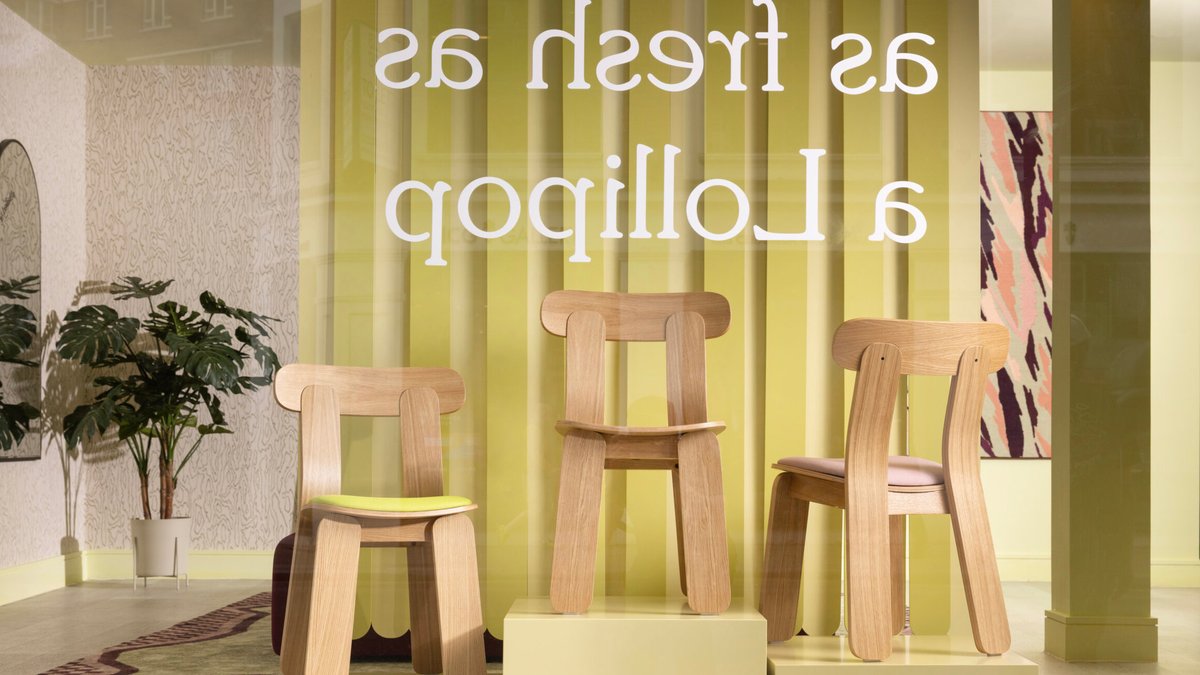
Deadgood has expanded its product line with new furniture designs, a sustainability tool for buyers, and a refreshed London showroom ahead of Clerkenwell Design Week. The brand’s latest chair, the Lollipop, blends playful aesthetics with structural durability, while its Furniture Passport initiative provides transparent lifecycle data for every piece.
A chair built for nostalgia and high-traffic use
The Lollipop Chair draws inspiration from wooden lollipop sticks, offering a lightweight yet sturdy form. Its plywood construction uses traditional joinery, balancing visual charm with functional strength. Designed by Vicki Leach, Deadgood’s design director, the chair meets the EN 16139 contract standard, making it suitable for public spaces like restaurants or offices.
Leach emphasized the chair’s adaptability. “It’s a bit of a chameleon; I can see it working beautifully in a high-end restaurant, a museum, or a contemporary workplace. It can play many different characters, leaving it open for interior designers and architects to use it to evoke whatever mood they want to convey.” The design process focused on creating an instant emotional connection, with the lollipop stick shape serving as a relatable hook. Each component is pressed from plywood, a material Deadgood has refined over two decades.
Sourcing posed a challenge: while plywood is widely used, few UK manufacturers could handle the chair’s complex design. Deadgood partnered with a European specialist to ensure precision and sustainability. The timber is FSC-certified and locally sourced, reinforcing the brand’s commitment to responsible materials.
New designs and a refreshed showroom
Alongside the Lollipop Chair, Deadgood has launched three additional products. The Folk sofa family now includes a smaller, modular version with adjustable heights and an integrated shelf. The HB Table, a collaboration with AtelierThirty Four, merges mid-century shapes with modern functionality. Wall’s End, designed by Heirloom, offers mobile partitions for flexible workspaces.
The Furniture Passport initiative marks another innovation. Each product includes an infographic detailing its carbon footprint, with a QR code linking to full lifecycle data. Co-founder Elliot Brook noted that the system aligns with upcoming legislation on sustainability disclosures. “The traffic-light system means that you can see at a glance whether a product is doing right or wrong by the planet, with the full data set behind a QR code for ease of access.”
Deadgood’s approach reflects its long-standing focus on durability and circular design. Founded in 2004 by Dan Ziglam and Elliot Brook, the brand has consistently prioritized material innovation and ethical production. The Furniture Passport extends this ethos, offering buyers clear, actionable data to support sustainable choices.


