
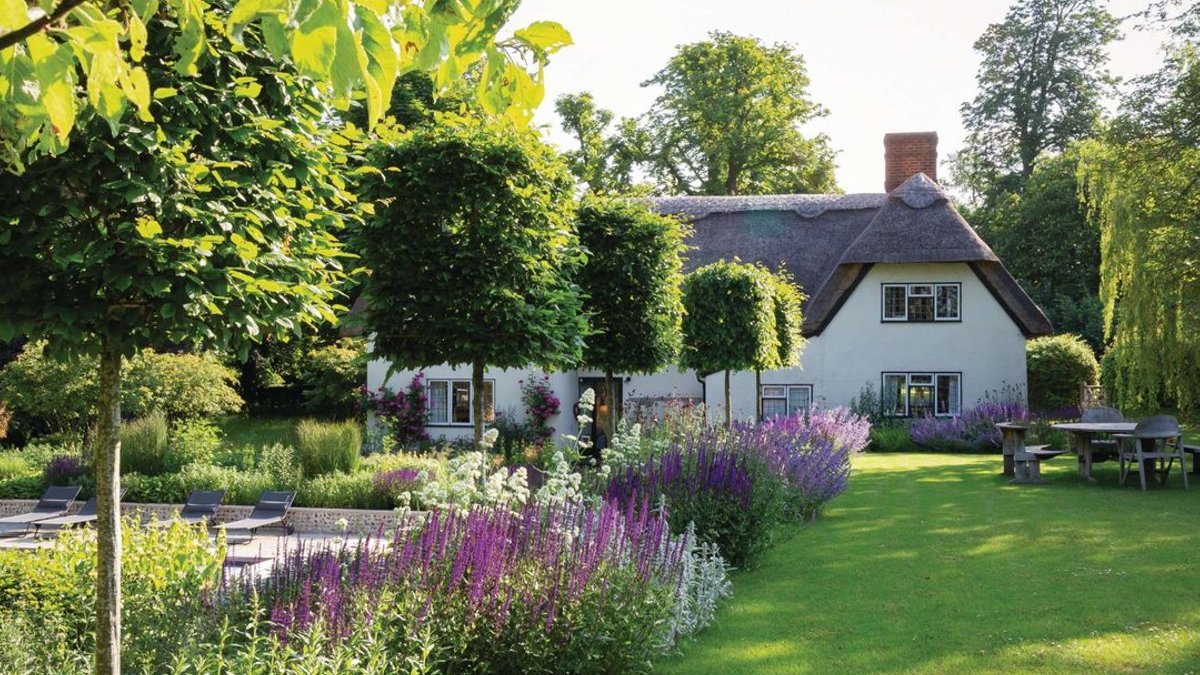
The 2027 Society of Garden and Environment Designers (SGLD) Awards shortlist features 25 projects that combine climate resilience, biodiversity, and innovative design across private estates, urban spaces, and public areas. Public voting for the People’s Choice Award closes on October 31, with winners announced in early 2027.
A mountain garden near Frankfurt integrates a new chalet with its rocky surroundings using dry-stone walls and native pines, avoiding concrete entirely. Planting—perennials, grasses, and slow-growing trees—frames valley views while reinforcing the site’s natural character. The design emphasizes low maintenance and ecological balance, a recurring theme among the shortlisted entries.
In the UK, Woodland Glade Sanctuary transforms a former lawn into a layered environment with winding paths through naturalistic planting. Gravel replaces concrete paving to improve drainage and support pollinators, while log piles and seating create wildlife habitats. Bulbs in retained lawn areas further boost biodiversity, proving small changes can turn underused spaces into functional ecosystems.
Adapting to Extreme Weather
Several gardens showcase climate adaptation through drought-resistant strategies. El Quejigal, a high-altitude retreat in Spain’s Toledo mountains, endures temperatures from -7°C in winter to 40°C in summer with minimal rainfall. The design eliminates turf, except near the pool, to cut water use, instead using drought-tolerant plants and restored dry-stone walls that blend house and wilderness. Water management is key: once established, the planting requires almost no irrigation, addressing worsening drought conditions.
The Netherlands’ Future Plants Environment serves as a botanical research hub where climate-adapted perennials and evergreen grasses create microclimates that reduce irrigation needs. Its flexible layout includes seating for seasonal study, merging research with public access. The focus on long-term species resilience reflects a broader shift toward low-maintenance, high-biodiversity solutions over ornamental perfection.
London’s Finsbury Circus Gardens reimagines the city’s oldest public park as a climate-resilient space. Sustainable drainage systems mimic historic marshlands, while pollinator-friendly borders and shaded tree ferns address flooding and ecological decline. Limestone bands and custom benches form a gathering area that also functions as a carbon-absorbing green lung.
Beningbrough Hall’s Mediterranean Garden near York reinterprets the estate’s Italian heritage with a gravel-based design that replaces amenity grass. Over 4,000 species, including 3,500 pollinator-friendly plants, thrive with minimal water, adapted to the UK’s hot, dry summers and wet winters. Water features, rills, pools, and sculptural bowls, add movement and habitat variety, demonstrating how public gardens can lead in sustainable landscaping.
Related Post: Jo Thompson to lead garden design at London college
Green Spine, a London boulevard, centers on 115 semi-mature trees and sustainable drainage systems that filter runoff while supporting wildlife. Climate-resilient species like Astrantia major and Dryopteris affinis ensure the space remains functional during extreme weather, addressing urban flooding and heat stress.
For homeowners, River Thames House in Berkshire adapts to flooding with planting that survives a month underwater, including Geranium macrorrhizum. Two lawns and an raised pool suit entertaining, while an oak boardwalk glides over a wildflower meadow, proving functional gardens can align with ecological resilience even in high-risk areas.
Accessibility and inclusivity feature prominently, with Horatio’s Garden in Belfast designed for spinal injuries patients. Smooth paths, threshold-free entrances, and sensory planting create a fully navigable space for wheelchairs and hospital beds. Therapeutic elements like a greenhouse and boccia court extend the garden’s social value beyond aesthetics.
Nightingale Primary School in London draws from Where the Wild Things Are, integrating 25 new trees, living sedum roofs, and interactive water play into the drainage system. Educational components, roof apiaries and allotment beds, turn the schoolyard into a living classroom where children engage with ecology through play.
The Lookout in Devon replaces a sloping, turf-heavy plot with level seating zones connected by limestone steps and paths. A firepit terrace, paved with cropped limestone setts, serves as the focal point, surrounded by naturalistic planting combining Stipa, Pennisetum, olives, lavender, and Armeria maritima. The design eliminates high-maintenance lawns while creating adaptable outdoor living spaces.
Alternative Planting Strategies for Climate and Health Challenges
A Bavarian nursery specializes in growing plants in sand-based substrates to improve their resilience against drought and extreme temperatures. This method reduces water demands while maintaining strong root development, making it a practical solution for regions facing worsening climate conditions.
Coastal and Wetland Innovations
Coastal projects address exposure through creative solutions. Canford Cliffs, a family holiday home in Poole’s conservation area, frames the house while working around tree protection rules. Sustainably quarried Purbeck stone forms three terraces for dining, lounging, and poolside relaxation. Planting combines Echium pininana spires and Taxus baccata pillows with coastal flora to thrive in exposed conditions.


