
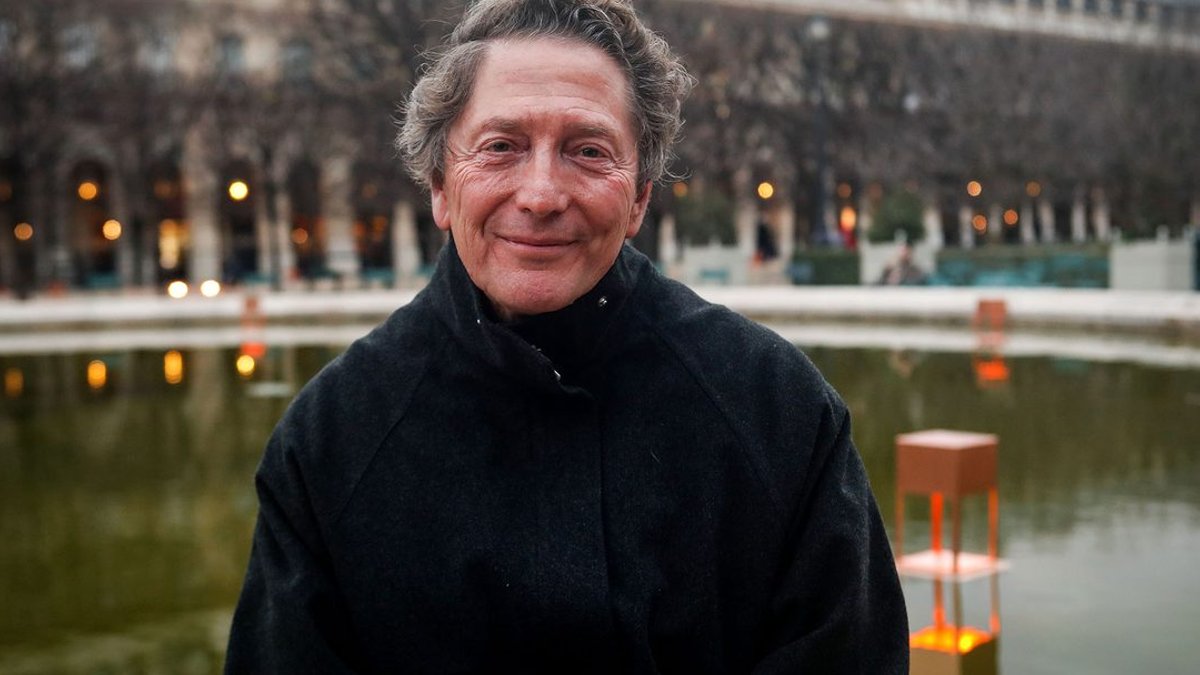
Garden design has lost one of its leading figures in Spanish setting designer Fernando Caruncho, who has died aged 68. Fernando was lauded for his gardens, which are often called minimalist and contemporary, and are known for being harmonious and timeless.
“People say I am contemporary,” he told me when I interviewed him back in 2017. “It is a discussion that is not interesting to me. Obviously I am contemporary, because I live now!”
Fernando grew up in Madrid, under Franco, in a family of creatives, and spent summers in the countryside at his grandfather’s house near Malaga, where he developed an appreciation for nature.
“That is my first memory of being in a garden, with the scent of jasmine, orange trees and myrtle. It had a real impact on me,” he said.
As a boy, Fernando enjoyed reading – “one of the most beautiful things in life” – and studied philosophy after leaving school. But he felt something was missing, noticing it was all talk and no action, and was almost ready to drop out of university when he attended a lecture on setting.
In 1979, he joined the setting studies programme at the Castillo de Batres, and opened a studio. At the age of 21, his first project was for his uncle Paco Muñoz, a notable interior designer whose new house had been designed by the famous modernist architect Richard Neutra.
Related: Family of five renovates Arden condo
Mas Floris near Girona, Spain, was one of Fernando‘s notable projects; a garden of ten acres with all the hallmarks of his style – a pared-back palette of Mediterranean plants, a symmetrical layout and a reflecting pool to bring the sky down into the garden.
The world of design really started to pay attention with the setting at Mas de les Voltes, in Catalonia, where parterres of wheat were framed by olive trees and sentinels of cypress; and he confirmed his place in the pantheon of designers with Amastuola in Puglia, Italy, where he laid miles of espaliered grapevines in a pattern of undulating arcs, like waves in a sea of green.
Fernando‘s approach for clients was more measured. Every project involved the same careful, considered process. To begin with, he would visit the site several times to discover the spirit of the place, the genius loci.
“When you approach a place for the first time, it is like meeting a person,” he said. “You have to spend some time with them, get to know them.”
In the past decade, Fernando was thrilled to be joined in practice by his two sons, Fernando and Pedro, who both trained as architects. They worked together on various projects, including slow gardening initiatives.
His son Pedro posted a touching eulogy on Instagram this week: ‘He believed in the transmission of knowledge and emotion as the founding act of the garden… I have had the privilege of working at his side and sharing unforgettable moments. Today I proudly join that chain of time as one more link, continuing the work of the studio through its projects and honouring his immeasurable legacy.
Related: Seniors spend $80k to renovate 2-room HDB flats
Considering Fernando‘s emphasis on the importance of passing on knowledge to the next generation, it’s clear that his legacy will continue to shape the world of garden design. His work serves as a reminder of the significance of preserving and promoting the connection between humans and nature.
They also walked a lot in the surrounding area outside the garden, as for them the key to a successful design was the relationship between the architecture of the house with the garden, and the garden with the wider setting.
Now, as the world of garden design moves forward, Fernando‘s words still resonate: “This is the best moment in the past century, though it may not seem this way. Modern life is uncertain, and if it continues in this way, where we put the unimportant first and the important last, it will be a disaster. We must consider the Earth our paradise, or we are lost.
His passing leaves a void in the world of garden design.
It will continue to inspire future generations of designers and gardeners alike.


