
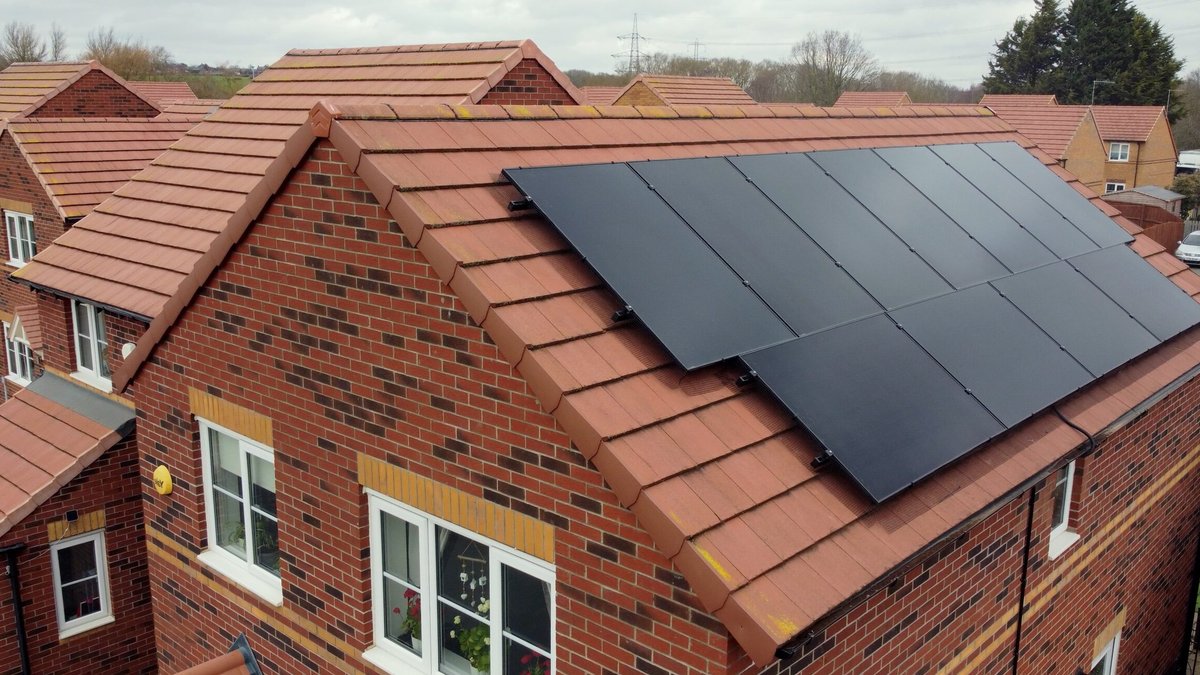
Solar panels are appearing on more British rooftops, but many homeowners still assume their property isn’t suitable. Misconceptions about roof direction, angle, and even resale value discourage people from considering the technology—despite advances that make solar viable in far more homes than before.
How UK weather powers solar effectively
The UK’s climate works better for solar energy than many expect. Though it receives less sunlight than southern Europe, its latitude between 50 and 60 degrees north means long summer days and usable winter light. Around 71% of a typical system’s yearly output comes in spring and summer, with the rest distributed across autumn and winter.
Modern panels don’t require direct sunlight. They generate electricity from daylight, so overcast skies don’t stop production. Efficiency improvements also mean even older homes can produce meaningful power without perfect conditions.
Roof direction has fewer limitations than assumed
South-facing roofs remain ideal, but east and west orientations perform well too—particularly for households that use more energy in the morning or evening. East-facing panels peak earlier, while west-facing ones continue producing into the afternoon. Installers customize layouts to match a home’s energy patterns rather than relying on a standard setup.
North-facing roofs generate less power, but they aren’t automatically ruled out. Ground-mounted panels or hybrid roof-and-garden systems can turn unused space into an energy source. Even chimneys, dormers, or nearby trees—often seen as problems—can be managed with careful planning.
The key factor isn’t direction alone but whether the system aligns with how a household uses electricity. A family running appliances in the evening might benefit more from west-facing panels than a south-facing array that peaks at midday.
Roof angle rarely prevents installation
The optimal angle for UK solar panels falls between 30 and 45 degrees, but roofs outside this range still function. Shallower pitches (10 to 30 degrees) work well, and installers can adjust the angle with mounting frames if necessary. A minimum tilt of 10 degrees helps rain wash away dust and debris, keeping panels clean.
Flat roofs present challenges, as standing water and dirt can reduce efficiency. Specialized mounts angle panels correctly while maintaining structural stability. Since most UK homes have pitched roofs, this affects only a small number of properties.
Solar panels can increase property value
Some homeowners fear solar panels will reduce resale value, but evidence suggests the opposite.
The reason lies in Energy Performance Certificate (EPC) ratings. Solar panels improve a home’s score, making it more appealing to buyers focused on long-term savings. Lower bills, environmental benefits, and energy independence are growing selling points in a competitive housing market.
Panels have also become more discreet. Current designs sit closer to the roof, reducing visual impact while maintaining performance. The change from bulky early models to low-profile systems has made them easier to integrate into most property layouts.
Financial advantages extend beyond bill reductions. Battery storage lets homeowners save excess daytime power for evening use, while export tariffs pay for surplus electricity sent back to the grid. Smart tariffs and simple adjustments—like running appliances during peak solar hours—can increase savings further.
Related: Sell Now, Sell Smart: 7 Expert Tips for a Quick Home Sale
Professional assessments ensure the right fit
Every home is different, so installers design systems to match each property. They evaluate roof orientation, pitch, shading, and available space before estimating annual output and payback time. Many companies offer financing to spread the upfront cost, and local grants can help offset expenses in some areas.
Monitoring apps allow homeowners to track generation, consumption, and savings in real time. The data helps optimize energy use, such as shifting high-draw appliances to daylight hours or storing power for peak-rate periods.
Savings vary, but annual reductions of £700 are typical. The exact amount depends on system size, energy habits, and local electricity rates. A professional survey provides a clearer estimate before installation.
What’s often missed is how solar adapts to different lifestyles. A retired couple with low daytime usage might pair panels with a battery to maximize self-consumption, while a family with children could prioritize a larger array to cover evening demand. The flexibility means most households can find a suitable setup.
With energy prices unpredictable and sustainability becoming more important, solar has become a practical upgrade for a wider range of homes. Roofs once considered unsuitable—whether due to direction, angle, or shading—can often support effective systems. The first step is a professional assessment, which can show how modern solar technology might work for a specific property, turning sunlight into lower bills and a reduced carbon footprint for years ahead.


