
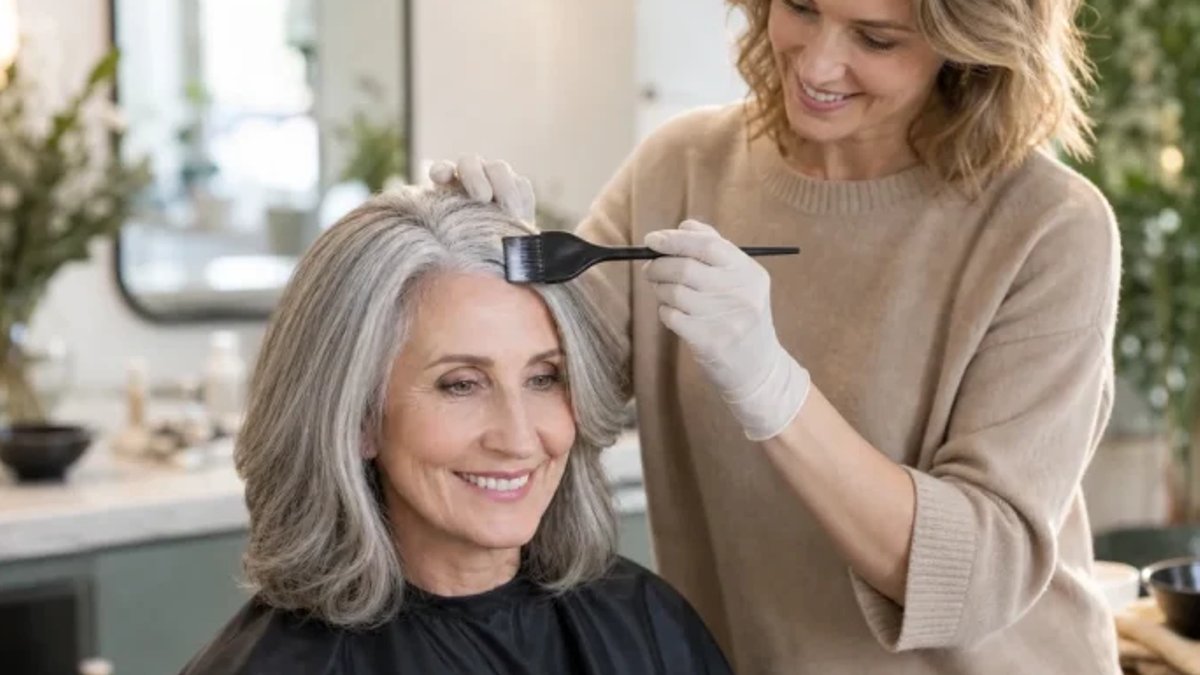
A simple treatment can transform dull gray hair into a polished, reflective finish this fall, but the wrong choice risks turning silver strands into an uneven, violet-tinged mess. The solution begins with a salon-applied clear gloss, priced from about $30 and lasting 4 to 6 weeks. Unlike permanent dye, it does not add color—it smooths the hair’s surface, making light reflect evenly instead of scattering.
Gray hair differs from pigmented hair in its natural dryness and porosity, with a rough cuticle that disrupts light reflection. A gloss’s slightly acidic formula, typically with a pH between 3.5 and 4.5, flattens the cuticle to create a mirror-like sheen. The effect appears instantly, but it will not cover gray strands. Pigments in the gloss settle only on the hair’s outer layers and fade with each wash, leaving gray strands only lightly tinted at best. For full coverage, permanent color or highlights remain the only viable options.
Current styling trends favor integrating natural silver with highlights and gloss rather than attempting full blending. The critical decision after age 60 shifts from whether to use gloss to selecting the right type.
Toned Gloss Risks and Violet Pitfalls
A clear gloss is the safest choice for nearly white or very light gray hair, as it adds no pigment and eliminates color mishap risks. However, it will not neutralize yellowing. For that, a toned silver gloss exists—but it carries risks. Violet pigments in these formulas counteract warm tones, yet porous white-gray hair absorbs them unevenly. Overapplication can produce a noticeable lilac shimmer, particularly on lighter hair where the effect stands out.
Independent lab tests confirm these concerns. An evaluation of purple shampoos found only 7 out of 20 products performed well, with several failing to fully neutralize yellow tones. Testers also warned against overprocessing. For precision, a salon consultation remains superior to drugstore alternatives.
Read Also: Comfortable jeans for hot weather found
For nearly white gray hair, the safest approach is to use a clear gloss unless a strand test demonstrates otherwise. Toned shades should only be applied after verifying how the hair absorbs pigment. Processing times vary from 5 to 30 minutes, depending on the product and hair condition. Cool undertones may not suit every complexion, and those who prefer them might explore ashy blondes for a seasonal update.
Proper timing and aftercare extend the gloss’s longevity. Scheduling the treatment with a trim every 6 to 8 weeks and waiting 24 to 48 hours before shampooing preserves the finish. Switching to a sulfate-free shampoo also helps maintain the cuticle’s smoothness. Daily washing or hot styling reduces the treatment’s lifespan, while the best results appear after the first gentle styling session, once the hair has settled.
Drugstore Alternatives vs. Salon Expertise
Drugstore shine masks offer a temporary solution, delivering instant softness but fading after 3 to 5 washes. They serve as a stopgap but cannot replace salon glosses for lasting results. The most reliable option remains the professional treatment: maximum shine, no color risk, and a finish that lasts.
The choice between clear and toned gloss depends on hair porosity and existing tone. A toned silver gloss, typically violet-based, neutralizes yellowing by counteracting warm undertones with its opposite on the color wheel. However, the treatment demands careful application. Stylists advise a strand test first, applying the product for 5 to 30 minutes to assess absorption. Highly porous white-gray hair can develop uneven violet patches if left on too long, particularly near the scalp or ends where pigment settles more heavily. While violet pigments fade with washing, the risk of a noticeable lilac cast remains until fully rinsed out.
For those with darker gray or silver hair, a toned gloss may blend more seamlessly, as the base tone conceals uneven absorption. However, the same lab tests that evaluated purple shampoos also revealed a common issue: many toned glosses fail to fully neutralize yellow tones, leaving a faint brassiness. This is why salons often combine toned gloss with pre-lightening or a yellow-canceling shampoo before application. Without proper preparation, results can be inconsistent. The safest method remains consulting a stylist to evaluate hair absorption and complexion compatibility, cool-toned skin may tolerate violet undertones better than warm-toned skin, though individual reactions vary.


