
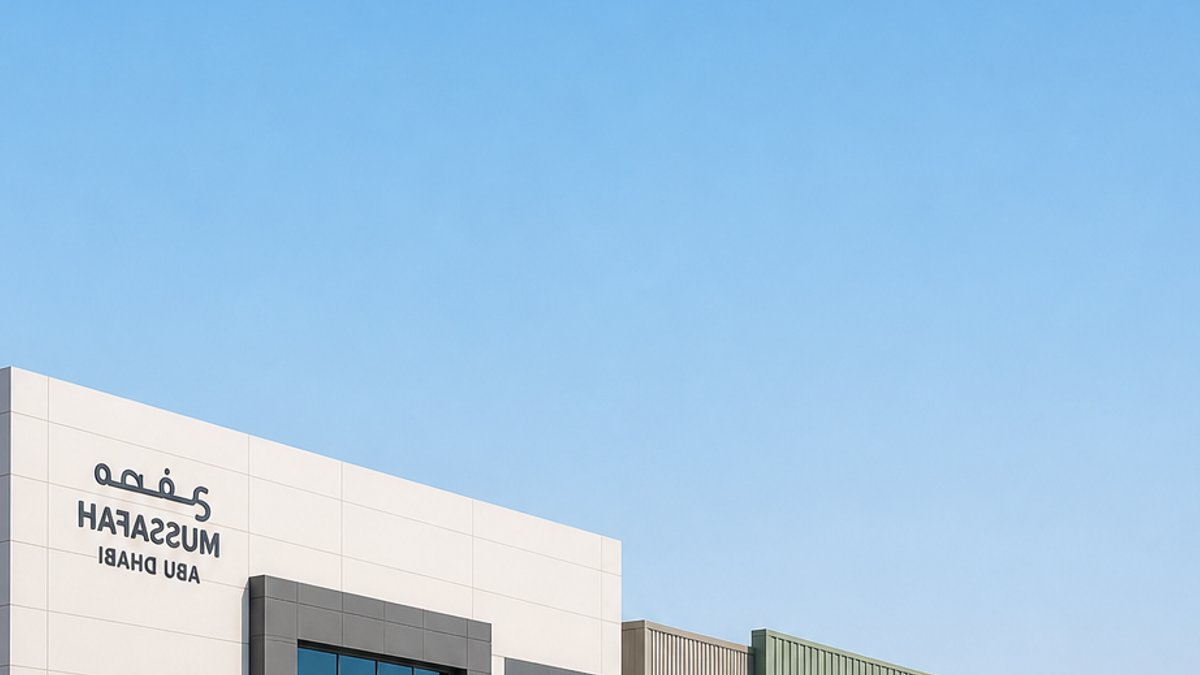
Abu Dhabi has launched new rules requiring all industrial buildings in Mussafah to meet standardized façade designs, marking the emirate’s first major effort to modernize its industrial zones. These rules are intended to create a uniform visual identity that supports both safety standards and aesthetic appeal.
The initiative, introduced by the Department of Municipalities and Transport, targets both new developments and existing structures. Compliance is expected to improve safety, raise environmental quality, and increase property values.
The Urban Planning and Parks Committee (UPPC) will provide detailed guidelines for upgrades, ensuring consistency across industrial facilities. Eng. Abdulla Mohamed Alblooshi, the committee’s director, noted that the standards account for the varied uses of industrial buildings, offering clarity for investors planning renovations or new projects. He emphasized that the guidelines include material specifications, fire-resistance requirements, and energy-efficiency measures. This transparency aims to reduce uncertainty while encouraging long-term improvements that align with Abu Dhabi’s economic goals.
Property owners face a phased rollout, allowing time to implement changes without sudden financial strain. Owners may schedule retrofits over several years, spreading costs and coordinating with production schedules. While non-compliance will eventually trigger regulatory measures, the gradual approach is designed to position upgrades as strategic investments rather than costs.
Industrial zones like Mussafah stand to benefit most directly, as standardized façades and safety upgrades could broaden their appeal to manufacturers, logistics firms, and light-industry operators. Higher demand may drive up property values, reinforcing Abu Dhabi’s reputation as a competitive hub for industrial investment. The initiative also supports the emirate’s broader economic strategy by improving its business environment and attracting foreign capital.
For now, the regulation remains focused on Mussafah, but its success could set a precedent for other industrial areas. The structured implementation process, combining flexibility with enforcement, aims to balance immediate practicality with long-term modernization.


